Growing production capacity, evolving EU packaging rules and greater scrutiny of sustainability claims are changing how companies evaluate bio-based polymers. For converters and procurement teams, the key is understanding the material, the supply chain and the documentation behind every claim. Bio-based polyethylene (bio-PE) and bio-based polypropylene (bio-PP) are attracting increasing attention as manufacturers look for alternatives to fossil-based feedstocks without necessarily changing their established processing technologies. For companies working with films, packaging, injection-moulded components and other plastic applications, these materials offer potential opportunities. However, successful sourcing requires more than identifying a bio-based grade. Technical suitability, supply availability, material origin and regulatory requirements all need to be considered together.
European bio-PE and bio-PP capacity is forecast to grow
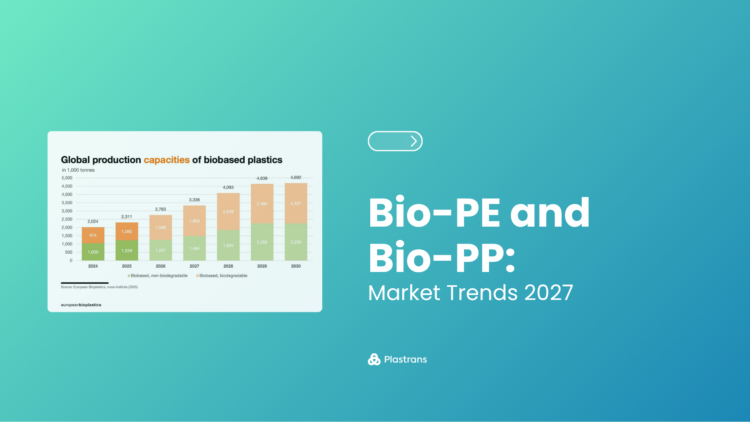
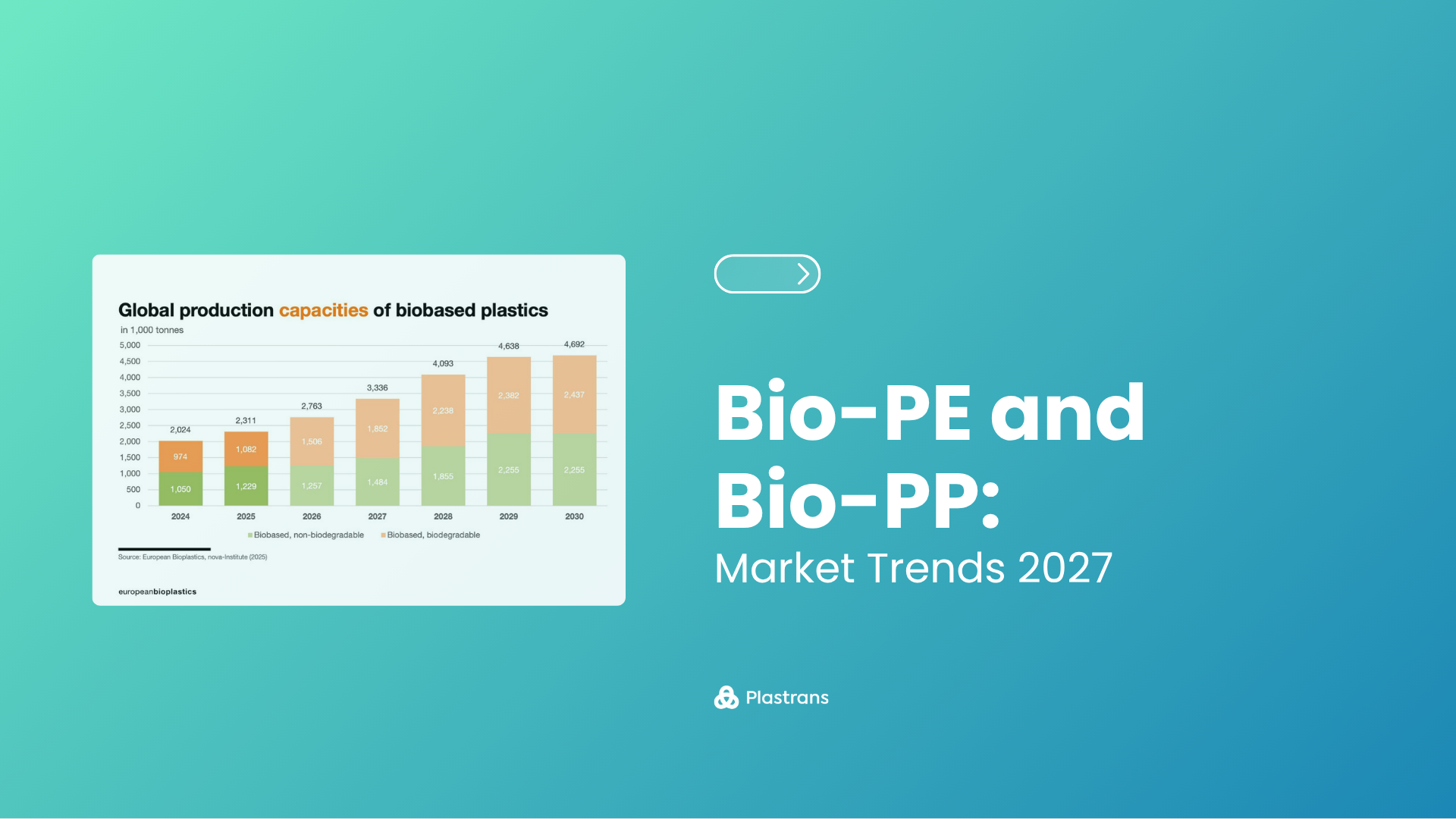
European Bioplastics’ Bioplastics Market Development Update 2025 projects global bio-based plastics production capacity to increase from 2.31 million tonnes in 2025 to approximately 4.69 million tonnes by 2030. Bio-PE and bio-PP are among the polymers expected to contribute to this growth.
According to Argus Media’s reporting on the forecast, European bio-PE capacity could rise from 22,110 tonnes per year in 2025 to 138,400 tonnes per year in 2030. European bio-PP capacity is projected to increase from 17,316 to 238,400 tonnes per year over the same period. These figures represent forecasts, not guaranteed production volumes. Nevertheless, they indicate growing investment in renewable feedstocks for two widely used polymer families.
The wider market remains relatively small. Bio-based plastics account for approximately 0.5% of global plastics production, illustrating both the potential for expansion and the limitations buyers should consider when planning large-volume sourcing.
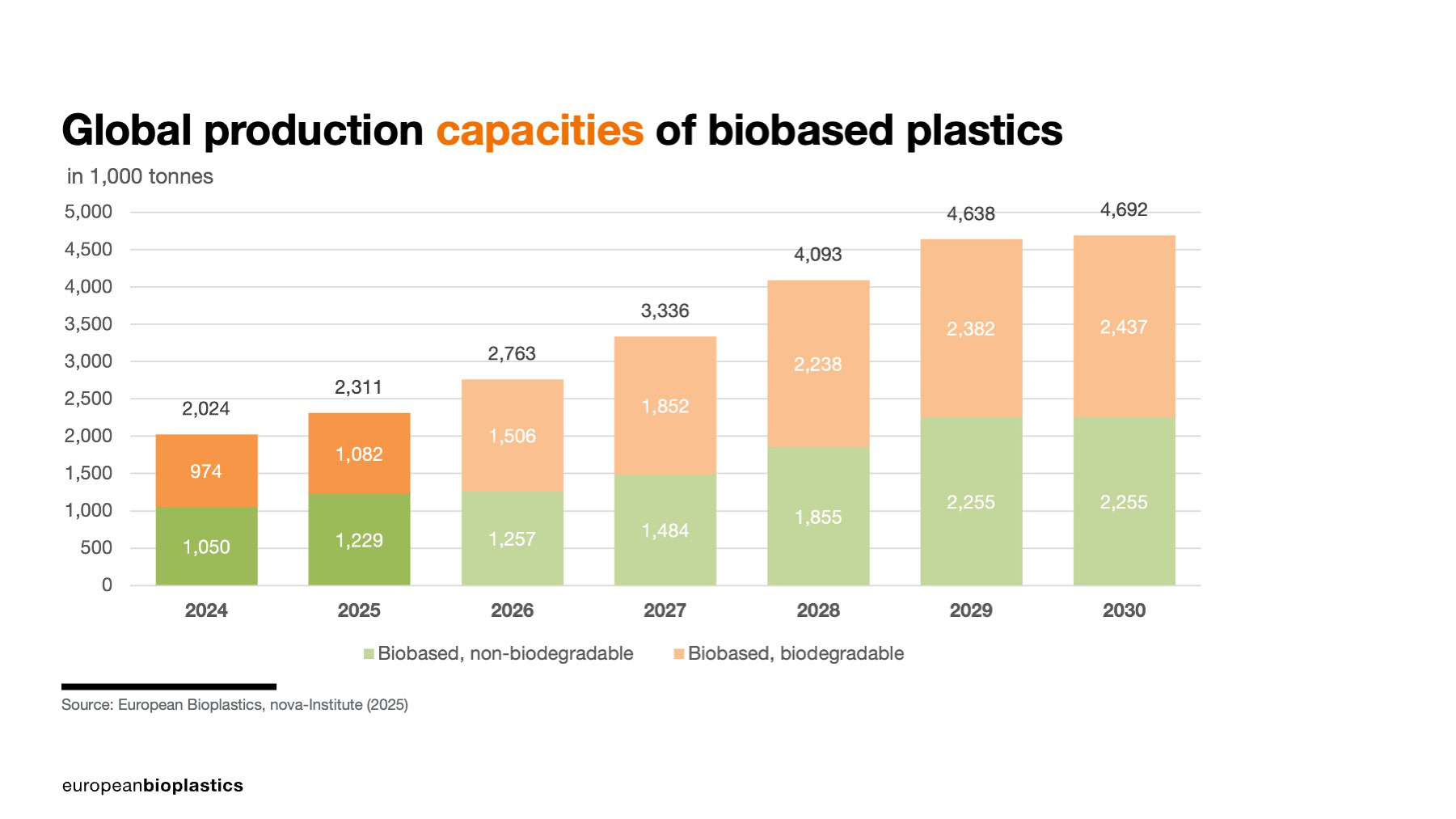
Feedstock can change without changing the fundamental polymer chemistry
One of the main advantages of bio-PE and bio-PP is that conventional drop-in grades have the same fundamental polymer chemistry as their fossil-feedstock equivalents. For example, bio-PE can be produced from renewable feedstocks such as sugarcane-derived ethanol, which is converted into ethylene and subsequently polymerised into polyethylene. Bio-PP can be produced using renewable feedstock pathways that provide the building blocks for polypropylene. The resulting polymer is not automatically biodegradable or compostable simply because its feedstock is renewable. For converters, this distinction matters. Depending on the grade, bio-based alternatives may be suitable for existing extrusion, blow-moulding or injection-moulding processes. However, processing compatibility and end-product performance must be established for the specific material. Properties such as melt flow rate, density, stiffness, impact resistance, sealing behaviour and environmental stress crack resistance remain important selection criteria, depending on the application.
Compare the technical datasheet of a bio-based grade with the material currently in use. Check processing conditions, mechanical properties, colour requirements, food-contact suitability where relevant, and any customer-specific approvals. Do not assume that all grades within the same polymer family are interchangeable.
Bio-based content, recycled content and mass balance are different
A material’s feedstock origin and the method used to substantiate its sustainability characteristics are separate considerations.
Three terms are particularly important:
Under mass balance, renewable and conventional feedstocks may enter a shared production system. The quantities and associated characteristics are tracked according to the relevant certification scheme, allowing specified renewable feedstock attributes to be allocated to products. This approach can support the use of alternative feedstocks within existing industrial infrastructure. However, the resulting claim depends on the accounting method, certification requirements and documentation. ISCC PLUS, for example, provides a framework for traceability and chain of custody. Certification does not mean that every claim can be used interchangeably: buyers must check the certificate’s scope and the specific product documentation.
The right material still needs to work commercially
A sourcing decision must balance material performance with availability, cost and supply reliability.
The European Commission’s Joint Research Centre identified production costs, technology readiness and feedstock sustainability among the challenges affecting the wider adoption of bio-based plastics. Renewable alternatives can carry a price premium over conventional fossil-based materials, although the difference varies by polymer, grade, producer and market conditions. Availability also matters. European Bioplastics reported that global bio-based plastics production reached approximately 1.67 million tonnes in 2025, compared with installed capacity of 2.31 million tonnes. This corresponds to an average utilisation rate of 72%, with substantial variation between polymer types. Neither capacity nor average utilisation alone tells a buyer how much of a particular grade is available. Supplier allocation, production location, logistics and order volumes all affect the practical sourcing decision. A structured evaluation should therefore include the technical specification, total material cost, expected consumption, delivery schedule and the documentation required to support any claims.
Planning your polymer sourcing for 2027?
Bio-PE and bio-PP offer opportunities for companies looking to diversify feedstocks while retaining the advantages of established polymer families. Their growing projected capacity makes them worth evaluating, but the right choice depends on the application, grade availability, technical requirements and evidence supporting the material’s origin.
At Plastrans Technologies GmbH, we support customers across the European plastics industry with conventional, recycled and bio-based polymers, as well as compounds and masterbatches. Whether you are assessing a new feedstock, reviewing an existing specification or preparing for changing packaging requirements, our team can help you explore suitable material options.
Looking for a polymer solution for your next application?
Contact Plastrans Technologies to discuss your technical requirements, sourcing priorities, and documentation needs.

You are currently viewing a placeholder content from Vimeo. To access the actual content, click the button below. Please note that doing so will share data with third-party providers.
More InformationYou are currently viewing a placeholder content from YouTube. To access the actual content, click the button below. Please note that doing so will share data with third-party providers.
More InformationYou need to load content from reCAPTCHA to submit the form. Please note that doing so will share data with third-party providers.
More InformationYou are currently viewing a placeholder content from Facebook. To access the actual content, click the button below. Please note that doing so will share data with third-party providers.
More InformationYou need to load content from reCAPTCHA to submit the form. Please note that doing so will share data with third-party providers.
More InformationYou are currently viewing a placeholder content from Instagram. To access the actual content, click the button below. Please note that doing so will share data with third-party providers.
More InformationYou are currently viewing a placeholder content from X. To access the actual content, click the button below. Please note that doing so will share data with third-party providers.
More Information